Choosing Bar Stools for Your Coffee Shop: A Simple Guide
Share
Walk into any busy coffee shop and the seating is doing more work than you think. It sets the mood, decides how long people stay, and quietly shapes whether a first-time visitor becomes a regular. Bar stools, in particular, have become a staple in modern cafes — they line the windows, frame the espresso bar, and make smaller spaces feel open and social.
But choosing right bar stools for your coffee shop is not as simple as choosing the ones that look good in the showroom. Coffee shops have unique needs: long sit times, daily wipe-downs, tight aisles, and a mix of solo customers, students, remote workers, and friends catching up. The wrong stool can mean wobbly seats within months, sore customers who leave early, or a space that feels off without anyone knowing why.
This simple guide walks you through every decision that matters — height, material, comfort, durability, style, and budget — so you can buy once and buy right.
Why Bar Stool Choice Matters More Than You Think
Coffee shop owners often treat seating as an afterthought, focusing on espresso machines, lighting, and menu boards first. That is a mistake. Seating directly affects three things that drive your bottom line:
-
Dwell time — how long customers stay (which often correlates with how much they spend).
-
Repeat visits — comfortable customers come back; sore ones quietly disappear.
- Aesthetic and brand — your seating photographs well or it does not, and that influences every Instagram tag.
A heavy-duty, well-chosen stool can serve thousands of customers a year for a decade. A cheap residential stool will start wobbling, peeling, or chipping within months in a commercial setting. Picking smart at the start saves money, headaches, and customer trust.
Step 1: Match the Stool Height to Your Counter
This is the single most common mistake new cafe owners make. The "right" height depends entirely on the surface customers will sit at.
There are three standard heights to know:
- Counter Height (24–26 inches) — pairs with counters around 36 inches tall. Common at cafe islands, espresso bars with pickup zones, and shorter window ledges.
- Bar Height (28–30 inches) — pairs with surfaces around 40–42 inches tall. Best for tall window bars, communal high-tops, and traditional bar setups.
- Extra Tall (33–36 inches) — niche use, mostly for very tall counters or showroom-style displays.
A quick rule: leave 9 to 13 inches between the seat and the underside of the counter. Less than that and customers cannot cross their legs; more than that and they feel like kids at a grown-up table.
If you are still unsure which height fits your space, our breakdown on counter height vs. bar height for cafes walks through real examples.
Step 2: Choose the Right Material
Material affects three things at once: how long the stool lasts, how it feels, and what it says about your brand. The big three for coffee shops are metal, wood, and hybrids.
Metal Bar Stools
Metal bar stools are the workhorse of commercial seating. They resist scratches, handle moisture, and clean up with a quick wipe — exactly what you need in a space where milk gets spilled, syrups get knocked over, and floors get mopped daily. Powder-coated steel frames are the standard for high-traffic cafes because they resist rust and chipping far better than untreated metal.
Wood Bar Stools
Wood bar stools bring warmth and character that metal simply cannot match. They suit cozy neighborhood cafes, third-wave coffee shops, and anywhere the brand leans toward "natural," "artisan," or "homey." The trade-off: wood needs a bit more care. Quality hardwood holds up well, but cheaper wood can dent, stain, or split under heavy use.
Metal Frame with Wood Seat
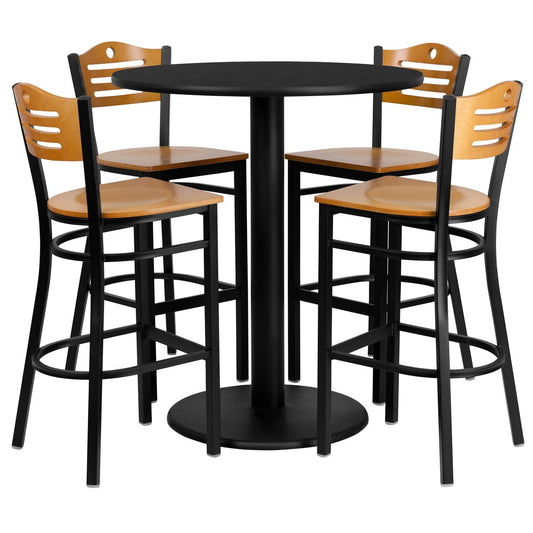
A favorite among coffee shop owners is the metal stool with a wood seat. You get the durability of a steel frame with the warmth of a wood top — and the design works in nearly any aesthetic, from industrial to mid-century to Scandinavian.
Step 3: Decide Between Stools With Backs and Backless
Backed and backless stools each have a place — and the right choice depends on how customers actually use your space.
Stools with backs are the better pick if:
- Customers sit for 30+ minutes (laptops, study sessions, meetings)
- You want the space to feel relaxed and lounge-like
- Older customers or longer-stay regulars are part of your core base
Metal bar stools with backs offer support without sacrificing the open, modern feel of a cafe.
Backless stools make sense when:
- Space is tight and stools need to tuck cleanly under the counter
- Turnover is fast (grab-a-drink, eat-and-go)
- You want a minimalist, clean-line look
Backless metal bar stools are also great for window bars where you do not want chair backs blocking the view from the street.
Step 4: Swivel or Fixed?
Swivel stools rotate, which sounds minor but matters more than people expect. Swivel bar stools make it easy to get on and off without bumping the customer next to you, and they are a quiet favorite at long communal counters.
Fixed stools are simpler, sturdier in the long run (fewer moving parts), and usually a little cheaper. They work best where stools are spaced apart and customers do not need to twist around to chat or grab their bag.
A simple test: if your stools are placed shoulder-to-shoulder along a bar, swivel. If they are spread out at separate small tables, fixed is fine.
Step 5: Prioritize Comfort for Real Sit Times
Coffee shop customers are not bar customers. They sit longer — sometimes hours longer. Comfort is not a luxury here; it is a revenue lever.
A few comfort details to check:
- Seat shape — slightly contoured or bucket seats distribute weight better than flat seats over long sit times.
- Footrest position — there should be a sturdy footrest 7–9 inches below the seat. Without one, customers' feet dangle and they leave early.
- Seat width — at least 16 inches across is comfortable for most adults.
- Cushioning — vinyl or upholstered seats are easier on the body for long sessions; hardwood and metal seats look great but get uncomfortable fast.
If your shop is built around remote workers and laptop sessions, lean toward cushioned seats with backs. If it is a quick-service espresso bar, hardwood or metal seats are perfectly fine.
Step 6: Buy for Commercial Use, Not Home Use
This is the warning we give every new coffee shop owner: do not buy residential bar stools for a commercial space. They will fail.
Commercial-grade stools are built for daily use by hundreds of different people. Look for:
- Welded steel construction (not just bolted)
- Reinforced seat brackets at the joints
- Floor glides that protect both the stool and your floor
- Weight ratings of 250–500 lbs for commercial use
- Stain- and wear-resistant finishes, not just paint
A "heavy-duty" classification matters. Our bar stools collection is built specifically for restaurants, bars, and cafes — meaning they are tested for repeat daily use, not occasional kitchen-island sitting.
Step 7: Match the Stool to Your Brand Aesthetic
Style is where most owners start, but it should be a Step 7 decision — not a Step 1 — because the wrong height or material in the right style is still the wrong stool.
Once the practical questions are settled, choose a finish and silhouette that fits your brand:
- Industrial cafe — black or gunmetal frames, raw wood seats, exposed welds, ladder-back styles.
- Scandi/minimalist cafe — light wood seats, slim metal legs, soft curves, neutral finishes.
- Vintage/rustic cafe — distressed metal finishes, warm wood tones, copper or bronze accents.
- Modern/upscale cafe — clean lines, polished metal, bucket seats, monochrome finishes.
Take a photo of your space, look at your wall colors, your countertop, and your lighting — then pick a stool that complements rather than fights those choices.
Step 8: Plan for Space and Stackability
Coffee shops are tight by design — every square foot has to earn its rent. Bar stools are space-efficient because they tuck under counters, but a few extra considerations help:
- Stackable stools — are gold for small cafes, weekend events, or shops that rearrange the floor for evening service. Stackable metal stools save serious storage space.
- Footprint per stool — measure both the seat width and the base. A 14-inch seat with a 17-inch base needs more clearance than its seat suggests.
- Aisle clearance — leave at least 18 inches behind seated customers for foot traffic.
Step 9: Budget Smart — Buy in Bulk
Buying eight or ten stools one at a time from a big-box retailer is a slow way to overpay. Coffee shops almost always need matching seating in volume, which means buying wholesale is both cheaper per unit and faster to coordinate.
When buying in bulk, look for:
- Bulk pricing tiers — discounts that scale with quantity
- Consistent stock — so you can reorder the same model in a year without mismatched colors
- Commercial freight options — shipping ten stools is a different operation than shipping two
- Financing options — useful when you are opening or refitting a full space
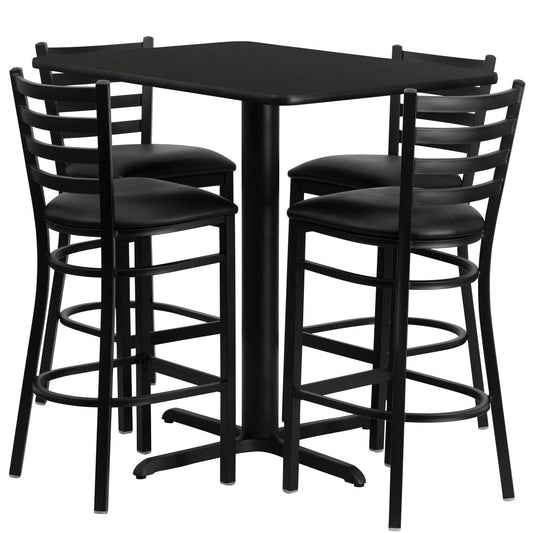
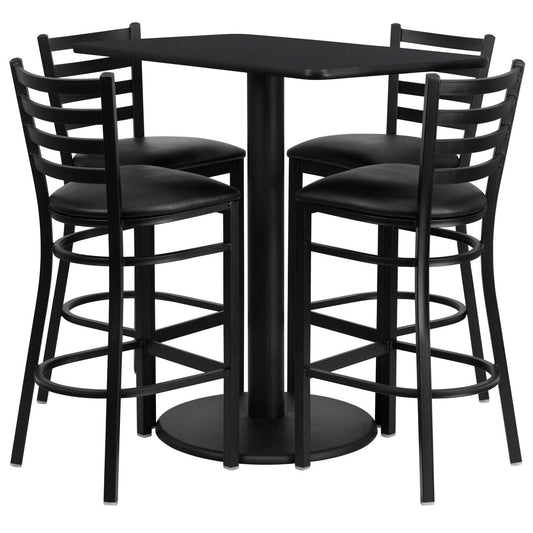
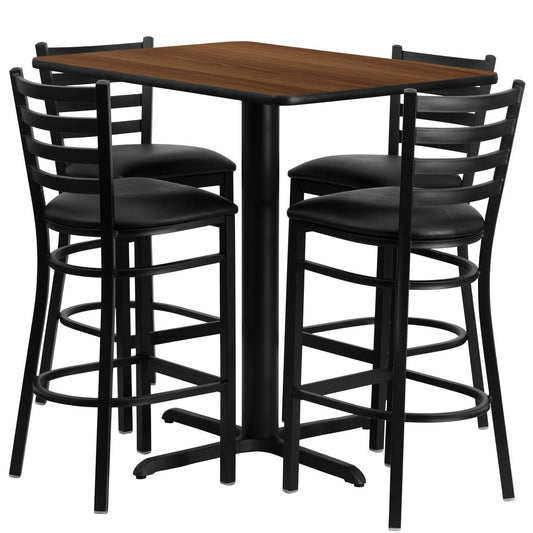
If you are outfitting a new cafe, consider bar height table sets that come matched to the stools — the cohesive look pays off and the bundled pricing is usually friendlier.
Step 10: Do Not Forget Outdoor Seating
If your coffee shop has a patio, sidewalk seating, or a covered porch, indoor stools will not survive the weather. Sun fades finishes, rain rusts untreated metal, and humidity warps wood. Indoor-outdoor bar stools are built specifically for the conditions outdoor cafes face: UV-resistant finishes, weatherproof construction, and materials that handle temperature swings without cracking.
The mistake we see most often: owners use indoor stools outside for "just the summer" and end up replacing them within a year. Buy the right tool for the right environment from day one.
Final Thoughts
Choosing bar stools for your coffee shop is not about finding the prettiest option in a catalog. It is about matching height to counter, material to use case, comfort to sit time, and durability to traffic. Get those four right and the style decision practically makes itself.
The best coffee shops treat seating as part of the customer experience — not a furniture line item. A stool that holds up for ten years, keeps customers comfortable through their second flat white, and matches the soul of your brand pays for itself many times over. If you want to see how the right bar stools shape the feel of trendy coffee shops, it is worth a quick read before you finalize your order.
FAQs
1. What height bar stools do I need for a coffee shop counter?
Most coffee shop counters are 36 inches tall, which pairs with counter-height stools (24–26 inches). Tall window bars or pub-style counters around 42 inches need bar-height stools (28–30 inches). Always leave 9–13 inches between the seat and the counter underside.
2. Are metal or wood bar stools better for a cafe?
Metal is more durable and easier to clean — better for high-traffic shops. Wood adds warmth and character — better for cozy, neighborhood cafes. Many owners pick the best of both with metal-frame stools that have wood seats.
3. How many bar stools do I need per linear foot of counter?
Plan for one stool every 24–28 inches of counter space. So a 10-foot bar typically seats 4–5 customers comfortably without crowding.
4. Do coffee shop bar stools need to be commercial-grade?
Yes. Residential stools are built for occasional home use and will fail under the daily wear of a cafe. Commercial-grade stools are tested for hundreds of users per week and last far longer in business settings.
5. Should I get swivel or fixed bar stools?
Swivel stools are easier to get on and off, especially at long communal counters. Fixed stools are simpler and have fewer parts that can wear out. For most coffee shops with shared bar seating, swivel is the more customer-friendly choice.