The Barista's Companion: Bar Stool Chairs in Trendy Coffee Shops

 Walk into a busy coffee shop and you’ll notice something beyond the aroma of fresh coffee—the space feels inviting, comfortable, and easy to stay in. Now compare that to a place where the seating feels awkward or uncomfortable, and customers don’t stick around.
This is where many coffee shop owners get it wrong. Seating isn’t just about style—it directly impacts customer experience, how long people stay, and how much they spend. In modern cafés, bar stool chairs play a key role in shaping that experience, especially around counters, windows, and high tables.
Choosing the right bar stools can turn your space into a place people love to sit, work, and return to again and again.
Introducing the C.U.R.E. Seating Framework
Choosing the right furniture for a coffee shop isn't about picking what looks good on Pinterest. It's about solving four real problems simultaneously. We call it the C.U.R.E. Framework:
- C — Comfort (Will guests stay long enough to order a second round?)
- U — Utility (Does the seating match how your space actually gets used?)
- R — Resilience (Can it handle the daily punishment of a busy café?)
- E — Esthetics (Does it tell the story your brand is trying to tell?)
Run every stool decision through C.U.R.E. before you buy a single piece. Let's break down each element — and show you exactly what to look for.
Comfort: The Invisible Sales Engine
Comfort isn't just about cushions. It's about ergonomics, proportion, and how long someone can sit before they start shifting around and eyeing the exit.
For coffee shop bar stools, seat height is the first thing to get right. Standard counter height (24–26 inches) works for café-style service counters. Bar height (28–30 inches) is ideal for high-top tables and window ledges. Mixing them without intention creates visual chaos and functional headaches.
Footrests matter more than people think. When someone sits on a stool without proper foot support, they get uncomfortable in under 20 minutes. A stool with a well-positioned footrest ring extends that to 45+ minutes — and in coffee shop math, that extra 25 minutes is often a second drink, a pastry, or a tip.
Most coffee shops don't lose customers over bad coffee. They lose them over bad seating.
Swivel stools add another layer of usability. They let guests turn to chat, people-watch, or pivot toward an outlet without awkwardly dismounting. For counter-facing seats especially, swivel is almost always the better choice.
Utility: Match Your Seating to How Guests Actually Use Your Space
This is where selecting bar stools gets strategic rather than decorative.
Think about the type of seating your coffee shop actually needs across its different zones. Most thriving coffee shops operate with at least three:
Zone 1 — The Quick Stop: Bar stools along a window ledge or counter. Solo guests, laptop workers, people on a 20-minute break. These seats need to be easy to hop on and off, with a surface nearby for a cup and a device.
Zone 2 — The Social Hub: High-top tables with two to four stools. Groups catching up, casual meetings, co-workers doing a working lunch. Comfort matters more here, and stools with backs score significantly better for stays over 30 minutes.
Zone 3 — The Work Zone: Counter-height surfaces near outlets. These are your long-haul guests — the remote workers and students. Stools here need to support extended sitting without fatigue.
Choosing the right furniture starts with mapping these zones before you even look at a catalog. If every stool in your shop is identical, you've already made a compromise somewhere.
Resilience: Commercial-Grade or Nothing
 This is where the real difference between commercial furniture and residential furniture becomes immediately obvious — and expensive if you ignore it.
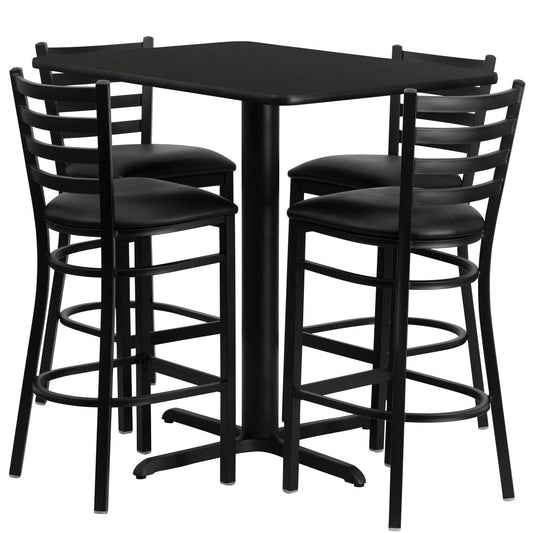
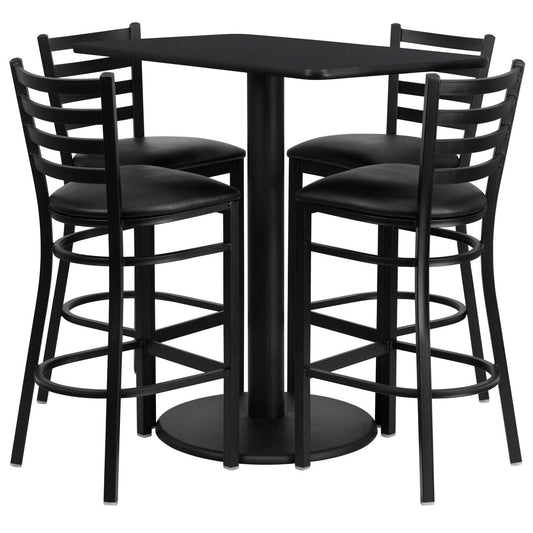
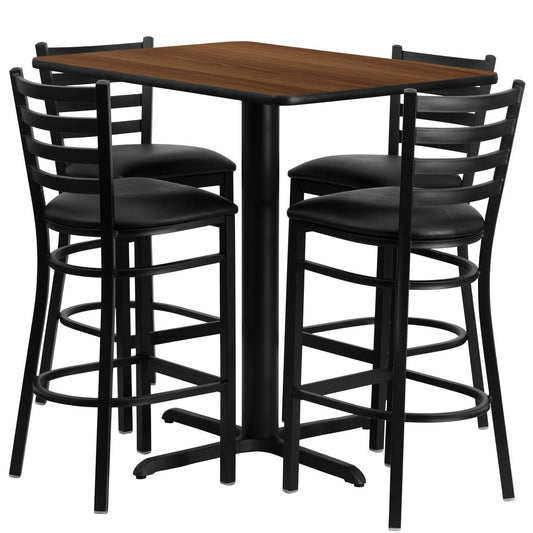
Modern metal bar stool chairs are the gold standard for high-traffic environments, and for good reason. Steel and iron frames handle the daily grind of people pushing, dragging, and stacking stools without the joints loosening or the welds cracking. Powder-coated finishes resist scratching, moisture, and the kind of wear that comes from hundreds of daily uses.
A solid commercial-grade metal bar stool will outlast three or four residential-grade alternatives. When you're buying 20 to 40 stools for a café opening, that math gets real very fast.
Pay attention to the base construction. A four-legged stool distributes weight more evenly and is less likely to wobble over time. Footrest rings — especially welded rather than screwed on — hold up significantly better under the constant foot-tapping and pushing that café guests do unconsciously throughout the day.
The cheapest stool is never the cheapest stool. It's just the one with the highest replacement cost.
For the seat itself, vinyl and faux leather beat fabric in a coffee shop environment every time. Spills happen constantly. Wipe-clean surfaces protect your investment and your staff's sanity.
Esthetics: Your Stools Are Part of Your Brand Story
Walk into any coffee shop that's doing it right — the ones with the full Instagram feeds and the lines out the door on Saturday mornings — and the furniture is never an afterthought.
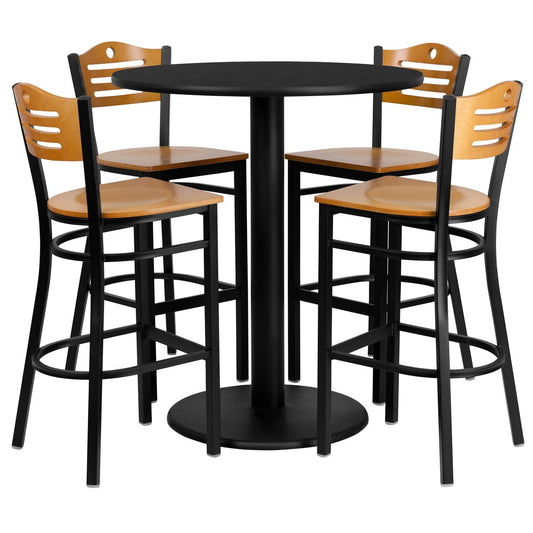
Modern metal bar stool chairs hit a sweet spot that works across almost every café esthetic: industrial, Scandinavian, rustic modern, minimalist. Matte black frames with wooden seats. Gunmetal with upholstered cushions. Brushed steel with leather. The material combinations alone can carry an entire design concept.
The key principle when selecting bar stool for esthetic impact: repetition creates identity. Three different stool styles in one space looks like indecision. A consistent frame finish with varied seat materials looks like curation. Pick a throughline and commit to it.
Color psychology plays a real role here too. Darker metals read as sophisticated and urban. Lighter finishes feel more open and casual. Warm wood tones invite lingering. If your brand is warm and community-focused, lean into that. If it's sleek and modern, steel and matte finish are your allies.
How to Narrow Down the Right Stool for Your Coffee Shop
Here's the quick decision-making sequence to use when choosing the right furniture for your café space:
- Measure your counter and table heights first. Everything else depends on this.
- Decide your zone strategy. Not every seat needs to serve every purpose.
- Prioritize commercial-grade materials. Non-negotiable in a high-traffic environment.
- Choose a frame finish that anchors your brand identity. Then build around it.
- Test before you commit. Sit in the stool. Swing your legs. Imagine sitting there for an hour.
The coffee shop owners who get this right don't just have a good-looking space. They have a space that fills up faster, clears slower, and generates significantly more per-square-foot revenue than competitors who treated seating as an afterthought.
Ready to Find the Right Bar Stools for Your Coffee Shop?
At Wholesale Bar Stool Club, we work with coffee shop owners, café operators, and hospitality buyers across the U.S. who need commercial-grade seating that holds up, looks sharp, and ships fast. Whether you're outfitting a 10-seat espresso bar or a 60-seat community café, we'll help you find the right stool for every zone.
Browse our collection of modern metal bar stool chairs →
FAQs
Q1: What is the best type of seating for a coffee shop?
The best type of seating for a coffee shop depends on your space layout, but most successful cafés use a mix: backless bar stools for quick counter spots, backed stools for high-tops where guests linger, and a handful of lower lounge seats for a relaxed zone. The key is matching the seat to the use case rather than using one style throughout.
Q2: How do I choose the right seat height when selecting bar stools for my café?
Start by measuring your counter or table surface height. For café counters (typically 36 inches), you need counter-height stools at 24–26 inches. For bar-height tables (40–42 inches), choose stools at 28–30 inches. Getting this wrong is one of the most common — and most expensive — furniture mistakes café owners make.
Q3: Are modern metal bar stool chairs durable enough for daily commercial use?
Yes — when they're rated for commercial use. Look for welded steel or iron construction, powder-coat finish, and commercial-rated weight capacity (typically 300–350 lbs). Modern metal bar stool chairs specifically designed for the hospitality industry will outlast residential-grade alternatives by years under daily café conditions.
Q4: Should coffee shop bar stools have backs or be backless?
It depends on how long you want guests to stay in that seat. Backless stools are great for quick-turnover spots near counters or windows. Backed stools significantly improve comfort for stays over 30 minutes, making them better for high-top tables or zones where you want guests to settle in and order more.
Q5: How many bar stools do I need for a coffee shop opening?
A general rule: plan for roughly 30–40% of your total seating to be stool-height for a typical café layout. So a 60-seat café might need 18–24 stools. Always order 10–15% more than your minimum count to account for replacements, damage, and future layout shifts — shipping lead times can hurt you if you're caught short during a busy season.